
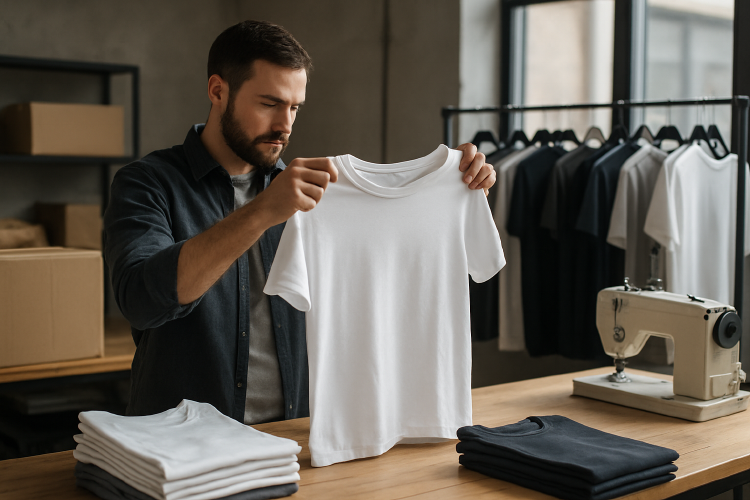
How to make a T-shirt: complete merchandising & production process for beginners
Have you ever looked at your favorite T-shirt and wondered, “How is this made?”
Making a T-shirt is not magic. It is a clear step-by-step process. From the idea in your mind to the final shirt in your hand, every stage matters.
This guide will explain the complete merchandising and production process in a simple and practical way—perfect for beginners.
1. Know your purpose
Before you make a T-shirt, you must know why you are making it.
- Is it for casual wear?
- Is it for sports?
- Is it for your own brand or for a client?
Example: If you want to make a summer T-shirt for teenagers, you might choose bright colors, soft cotton, and trendy prints.
2. Plan the design
Your design is your starting point.
- Draw your idea on paper or use a design app.
- Decide the fit: slim, regular, or oversized.
- Choose fabric: cotton, polyester, or a mix.
Practical tip: Touch and feel different fabrics in a local fabric market. It helps you understand which one feels better for your target customer.
3. Choose fabric and materials
This step is called sourcing.
- Pick the main fabric.
- Choose the neck rib.
- Get the labels, tags, and sewing threads.
Example: If your design is for sports, you may need breathable polyester. If it’s for everyday wear, cotton is the best.
4. Make a work plan (merchandising)
Merchandising is like making a to-do list with a timeline.
- Write down each step from design to delivery.
- Set dates for every step ( TNA calendar ).
- Talk to suppliers and factories to make sure they can meet the deadlines.
Reality check: If fabric is late, the whole order will be late. That’s why planning is key.
5. Create samples
Before you start bulk production, make a sample.
- First sample: First try of your design.
- Fit sample: Adjust size and shape to make it perfect.
- Pre-production sample: Final approved sample before bulk.
Example: If the sleeve looks too long in the first sample, fix it before going to bulk production.
6. Cut the fabric
Once the sample is approved, it’s time to cut.
- Spread the fabric in layers.
- Use a cutting plan (marker) to avoid waste.
- Cut with a straight knife or machine.
Practical tip: A good cutting plan can save fabric and reduce cost.
7. Print or embroider
If your T-shirt has a design, logo, or text, do it now.
- Screen print: Good for bold designs.
- Digital print: Best for detailed images.
- Embroidery: Gives a premium look.
Example: For a sports team shirt, you may screen print the team name on the front and embroider the logo on the sleeve.
8. Stitch the T-shirt
This is the main stage where all pieces come together.
- Sewing the front, back, sleeves, and neck.
- Check quality after each step.
Beginner advice: Even one broken stitch can make the shirt look cheap. Always check.
9. Finishing touches
After sewing, the T-shirt goes through the finishing section — the beauty parlor of the garment industry — where it gets a clean, fresh, and ready-to-wear look.
- Trim extra threads.
- Iron to remove wrinkles.
- Add labels, size stickers, and price tags.
- Do a final check for stains or damage.
Example: A customer might reject a shirt just because of a small stain—even if the rest is perfect.
10. Pack and ship
- Fold the shirt neatly.
- Put it in a polybag.
- Pack in cartons for shipping.
- Send by courier, air, or sea.
Practical truth: Good packaging makes your T-shirt look more valuable.
11. Sell your T-shirt
Even the best T-shirt needs marketing.
- Sell online through your own website or marketplaces.
- Use social media like Instagram, Facebook, or TikTok.
- Work with influencers to show people wearing your shirt.
Example: Post a short video showing how your T-shirt is made. People love behind-the-scenes stories.
Final words
Making a T-shirt is a mix of planning, action, and detail. As a beginner, you may make mistakes, but every project teaches you something new.
Follow these steps:
- Know your purpose
- Design
- Source materials
- Plan
- Sample
- Cut
- Print/embroider
- Stitch
- Finish
- Pack
- Sell
If you focus on quality, timing, and presentation, your T-shirts will stand out—and customers will come back again and again.
💬 0 Comments
💭 Share your thoughts