Current Trends in Bangladesh’s Garment Industry
When the world thinks of affordable fashion, one country quietly threads its name into every stitch — Bangladesh. What started decades ago as a struggling economy has today emerged as the second-largest garment exporter globally, just behind China. But the journey wasn’t just about numbers and exports. It’s about people, evolution, survival, and now — a bold transformation.
Let’s dive into the current trends shaping Bangladesh’s garment industry — not just on paper, but through the lens of factories, workers, innovation, and the global market.
A Brief History: From Struggle to Global Stage
The garment industry in Bangladesh didn’t just pop up overnight. It began in the late 1970s, when visionary entrepreneurs like Desh Garments Ltd collaborated with South Korea’s Daewoo to transfer knowledge and technical expertise. What followed was nothing short of a textile revolution.
By the 1990s, garment exports were booming. Factories mushroomed across Dhaka, Chittagong, and Narayanganj, offering cheap labor to global brands. But this boom came at a cost — low wages, unsafe working conditions, and poor regulations. The infamous Rana Plaza collapse in 2013, where over 1,100 workers died, became a painful turning point.
Since then, Bangladesh has changed — not perfectly, but remarkably.
Green is the New Black: Eco-Friendly Manufacturing
Bangladesh now has the highest number of green garment factories in the world.
Yes, you read that right. Over 200 LEED-certified (Leadership in Energy and Environmental Design) factories, with dozens ranked platinum. This eco-conscious trend reflects the industry’s push towards sustainability.
- Solar panels on factory roofs.
- Rainwater harvesting systems.
- Efficient waste management.
Brands like H&M, Zara, and Uniqlo are now sourcing from Bangladesh not just for price — but for green compliance.
“We’ve moved beyond sweatshops,” says one factory owner in Gazipur. “Now, we lead in sustainability.”
The Rise of Digital Factories
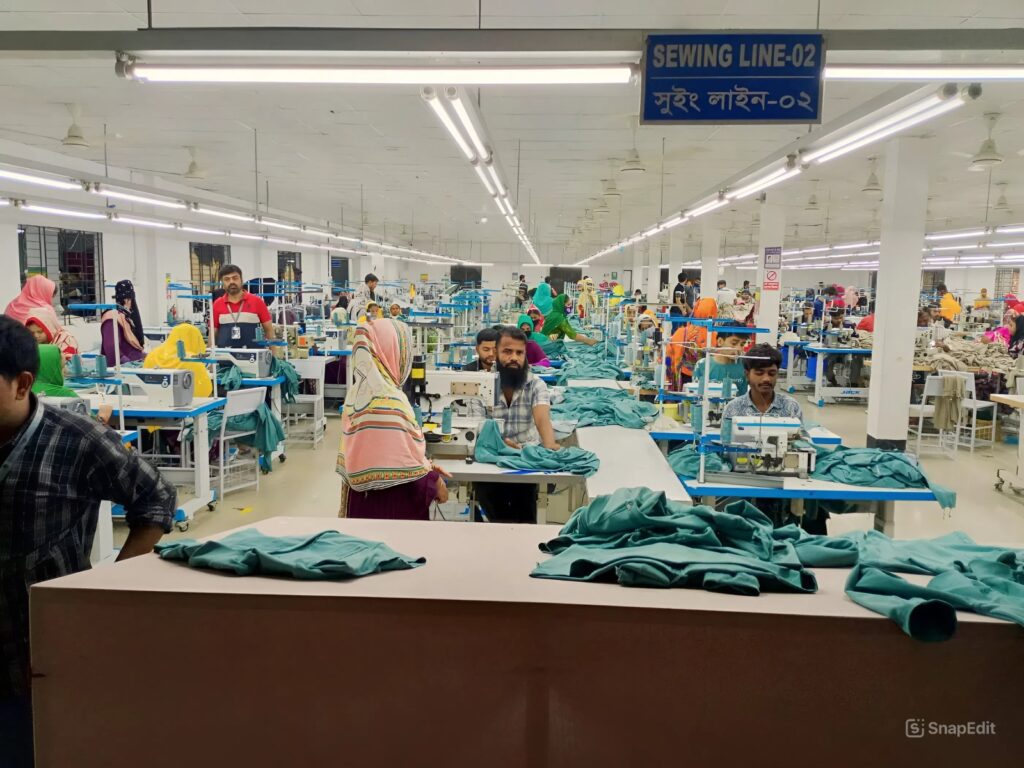
Bangladesh’s garment industry is walking into the Industry 4.0 era. From digital cutting tables to automated sewing machines, technology is reshaping traditional floors.
- ERP systems track inventory in real-time.
- AI-based quality control minimizes human error.
- CAD designs replace hand sketches.
Training centers in places like BGMEA University of Fashion & Technology (BUFT) are now focusing on digital literacy and modern textile engineering.
The future worker is not just a tailor — they’re a tech-enabled artisan.
Women Empowerment in Stitch & Spirit
Over 4 million people work in Bangladesh’s garment industry — and around 60% are women.
These women, many from rural backgrounds, are not just earning wages — they’re changing destinies. Today, women are working as:
- Supervisors
- Machine operators
- Line managers
And increasingly, in compliance and HR roles.
Microloans, savings groups, and workplace daycares are giving working mothers a fair shot at balance.
This human-centered trend is reshaping the social fabric — from home kitchens to boardrooms.
Ethical Branding & Compliance Pressure
Post-Rana Plaza, buyers are demanding full compliance — no child labor, fair wages, fire safety, and decent housing.
- Accord and Alliance inspections led to the shutdown of over 1,600 unsafe factories.
- Audit culture is now the norm.
- Brands want transparency — right down to the thread.
Factories that don’t comply? They lose contracts.
This push is driving the emergence of compliance-focused units, and even worker unions are gaining strength.
Geopolitics and The China+1 Strategy
With rising labor costs in China and the U.S.–China trade tensions, global buyers are now applying the “China+1” sourcing strategy.
Bangladesh is the top beneficiary.
- It’s cheaper than Vietnam.
- It has scale and manpower.
- Infrastructure, though still improving, is more reliable than before.
As a result, orders from Western and even Eastern brands are pouring in. Bangladesh is no longer the backup — it’s now a primary source.
Product Diversification: Beyond Basics
Once known just for t-shirts and jeans, Bangladesh is now producing:
- Technical textiles
- Activewear
- Lingerie and outerwear
- Sustainable fabrics like Tencel, bamboo, and organic cotton
Factories are collaborating with global designers to move up the value chain — because low margin basics aren’t enough anymore.
This transition is bold, but necessary. The next trend? Smart textiles and wearable tech — and Bangladesh is already experimenting.
E-commerce and Direct-to-Consumer Models
With the pandemic came the e-commerce boom. Now, many local manufacturers are launching their own brands, selling directly via platforms like:
- Daraz
- Shopify
This is a big shift — from OEM (Original Equipment Manufacturer) to OBM (Own Brand Manufacturer).
Startups like Sailor, Yellow, and Artisan are creating uniquely Bangladeshi fashion lines for both local and global audiences.
Challenges Still Loom
Despite progress, challenges persist:
- Energy crisis and power shortages.
- Dependency on imported raw materials.
- Port congestion at Chittagong.
- Pressure to increase minimum wages.
To stay ahead, Bangladesh needs not just speed — but resilience, branding, and policy support.
Conclusion: A Story Still Being Stitched
Bangladesh’s garment industry isn’t just a collection of factories. It’s a living, breathing ecosystem. From the hands of a village woman threading a needle, to the robotic arm sewing technical jackets — it’s a symbol of transformation.
The current trends show a clear message: Bangladesh is no longer chasing the world. It’s becoming a leader in sustainable, ethical, and technologically advanced apparel manufacturing.
As fashion evolves, so does the heart behind it — and right now, that heartbeat echoes from the garment floors of Bangladesh.
💬 6 Comments
💭 Share your thoughts