
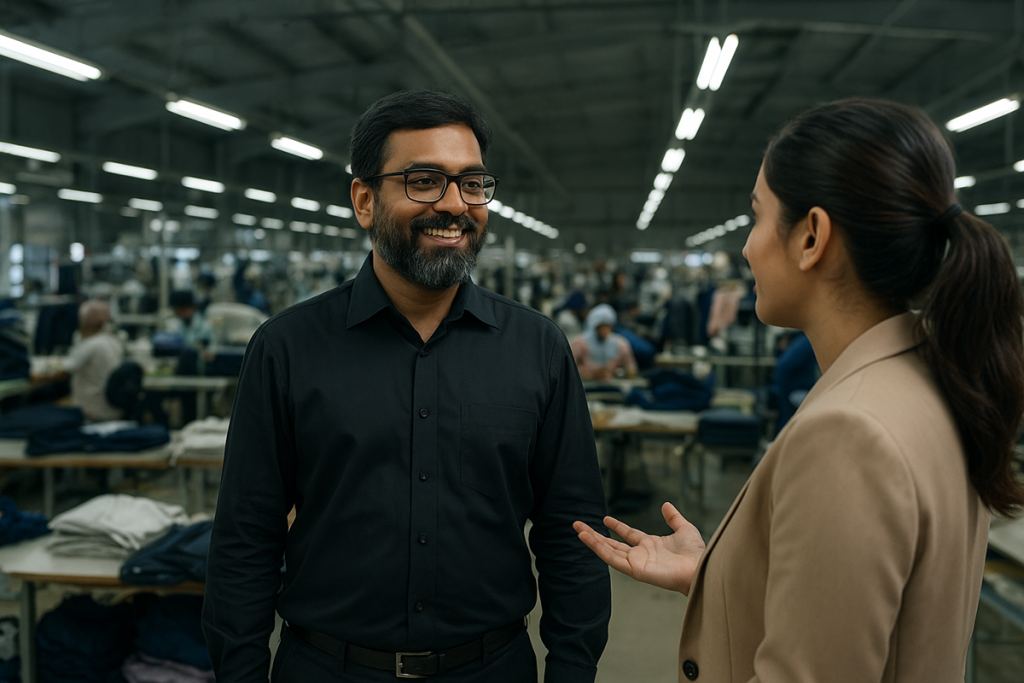
Merchandising vs Marketing in the Apparel Industry: Key Differences
In the competitive world of fashion and apparel, two words come up again and again: merchandising and marketing. At first, they may sound similar — and many people, even inside the industry, confuse one with the other. But in reality, they are two very different jobs, each with its own role and importance for a brand’s success.
If you’re a student, a beginner merchandiser, or someone dreaming of building a career in the apparel industry, understanding merchandising vs marketing is not just useful — it’s essential. In this article, we’ll break it down in the simplest, most practical way possible, so you can clearly see how they differ, how they connect, and why both are vital for the apparel business.
What is merchandising in the apparel industry?
Merchandising is the backbone of the apparel supply chain. It’s the process that takes an idea for a garment and turns it into a real product — produced, shipped, and delivered to the buyer on time, at the right quality and price.
In simple words, merchandising is everything that happens behind the scenes to make sure a buyer’s order is successfully executed. A merchandiser acts as the bridge between the buyer (brand/retailer) and the factory (supplier/producer).
Here’s what a merchandiser typically does:
- Communicates with buyers to understand product details.
- Develops samples and gets approvals.
- Sources raw materials (like fabric, trims, and accessories).
- Follows up on production schedules.
- Ensures quality control at each stage.
- Arranges shipment and documentation.
Think of a merchandiser as a project manager for garments — responsible for planning, coordination, timing, quality, and cost.
Example:
A UK fashion retailer places an order for 50,000 cotton T-shirts. The merchandiser in a Bangladesh factory ensures the fabric is dyed correctly, production starts on time, stitching quality meets buyer standards, and the goods are shipped before the deadline. Without merchandising, the order would never be completed successfully.
What is marketing in the apparel industry?
Marketing is all about selling the story — creating demand, building brand awareness, and convincing customers to buy. It deals with the market, trends, consumers, and positioning a product in a way that makes people want it.
Marketing in the apparel industry includes:
- Market research and consumer insights.
- Product positioning and pricing strategies.
- Advertising campaigns and promotions.
- Social media and influencer collaborations.
- Launch events and seasonal campaigns.
Marketing is not about making the clothes — it’s about making people want to wear them.
Example:
The same UK brand that ordered those 50,000 T-shirts will use marketing to sell them — by creating stylish photoshoots, running ads on Instagram, working with influencers, and highlighting sustainability or unique design features.
Marketing in the apparel industry: The bangladesh perspective
In Bangladesh’s garment industry, marketing often works differently from how it is described in books or global business models. Here, marketing is usually handled by factory marketing merchandisers, who focus on bringing in orders rather than directly influencing consumer demand. Instead of creating campaigns for end customers, their main job is to build relationships with buying houses or buyers and secure production orders for the factory.
There are mainly two types of buying houses in Bangladesh:
- ✉️ Liaison offices – managed directly by international buyers.
- 🏢 Trading offices – agencies that collect orders from buyers or other buying houses and then place them with local factories.
Factory marketing teams often communicate with these buying houses to receive orders. In some cases, they even contact buyers directly to present their factory’s capabilities — such as production capacity, quality standards, pricing, and compliance — and try to win business. Only a small portion of marketing professionals follow the traditional marketing approach of storytelling, branding, or consumer-focused promotion.
As a result, marketing in Bangladesh’s apparel sector is mostly order-driven rather than consumer-driven. Instead of shaping consumer preferences or creating new trends, the focus remains on meeting buyer requirements and producing garments according to their specifications. While this approach is practical for export-oriented factories, it also highlights an opportunity: as Bangladesh’s garment industry evolves, developing stronger branding and consumer-oriented marketing strategies could help factories move up the value chain and compete more directly in the global fashion market.
Merchandising vs Marketing: The core difference
Here’s the simplest way to understand it:
- Merchandising = Making the product real.
- Marketing = Making the product desirable.
One happens inside the supply chain (factory to buyer), and the other happens in the marketplace (brand to consumer).
Let’s look at their key differences side by side:
| Aspect | Merchandising | Marketing |
|---|---|---|
| Focus | Production & execution | Promotion & sales |
| Main Goal | Deliver the product on time, on cost, on quality | Create demand and boost sales |
| Works With | Buyers, suppliers, production team | Consumers, media, sales team |
| Time Frame | Starts before production and ends at shipment | Starts before launch and continues after sales |
| Key Skills | Communication, planning, sourcing, quality follow-up | Creativity, consumer psychology, branding |
| Example | Following up fabric dyeing schedule | Running an Instagram ad campaign |
In short, merchandising brings the product to life, and marketing brings the product to the world.
Why both are crucial for the apparel business
The fashion business is like a stage show. Merchandising is the backstage crew — making sure the lighting, costumes, and timing are perfect. Marketing is the performance — capturing the audience’s attention and applause. One cannot succeed without the other.
Here’s why both are essential:
1. Quality products alone are not enough
You can make the best T-shirt in the world, but if no one knows about it, you won’t sell a single piece. That’s where marketing comes in.
2. Great marketing can’t save poor execution
Even the most creative campaign will fail if the products are delayed, low quality, or overpriced. Merchandising ensures the promise made by marketing is actually delivered.
3. Together, They build brand trust
When products are delivered on time and marketed effectively, customers trust the brand — leading to repeat business and long-term growth.
How Merchandising and Marketing work together
Although they are different, merchandising and marketing are deeply connected. The best apparel companies build strong collaboration between both teams.
Here’s how they support each other:
- Marketing informs merchandising about market trends, consumer preferences, and seasonal demand. This helps merchandisers source the right fabrics, styles, and quantities.
- Merchandising informs marketing about production timelines, costs, and product capabilities. This helps marketers plan campaigns realistically and price products effectively.
Real-World Scenario:
A brand wants to launch a summer collection with pastel linen shirts. The marketing team shares market data showing rising demand for sustainable fabrics. The merchandising team sources organic linen and ensures bulk production is ready before the launch date. The marketing team then runs ads highlighting sustainability. Together, they deliver a successful product line.
Career paths: Which one is right for you?
Both merchandising and marketing offer exciting career opportunities in the apparel industry — but they suit different types of people.
- If you enjoy organization, coordination, problem-solving, and working behind the scenes, merchandising might be your path.
- If you love creativity, trends, communication, and influencing people, marketing could be your best fit.
Some professionals even develop skills in both areas, becoming powerful assets to fashion companies.
Final thoughts: Merchandising vs Marketing — Two sides of the same coin
At the end of the day, merchandising and marketing are not rivals — they are partners. One brings the garment into existence, and the other gives it a purpose in the market.
In the apparel industry, success depends on the perfect balance between these two forces. A beautifully merchandised product without marketing will stay in the warehouse. A brilliantly marketed product without solid merchandising will never arrive.
So, whether you dream of being a top merchandiser or a creative marketer, remember: understanding both worlds will make you far more valuable in the fashion business.
💬 0 Comments
💭 Share your thoughts