What is Trims and Accessories in Apparel Industry? for Beginner Merchandisers.
Introduction
When we look at a garment, the first thing we notice is the fabric and style. But if you observe closely, you will see many other small things—like zippers, buttons, tags, polybags, and even hangers. These are called trims and accessories.
For a beginner merchandiser, understanding trims and accessories is a must. Why? Because every order, every costing, and every buyer communication depends on these details. Without trims and accessories, no garment can be properly made, shipped, or presented to customers.
In this article, we will explore what is trims and accessories in apparel industry, their differences, importance, and practical examples. Let’s dive in.
What are trims in apparel industry?
Trims are all the materials used in a garment other than the main fabric. They are essential for construction and functionality.
👉 A simple definition: Trims are directly attached to the garment and remain with it throughout its lifecycle, playing both functional and decorative roles.
Examples of trims:
- Sewing thread
- Buttons
- Zippers
- Elastic
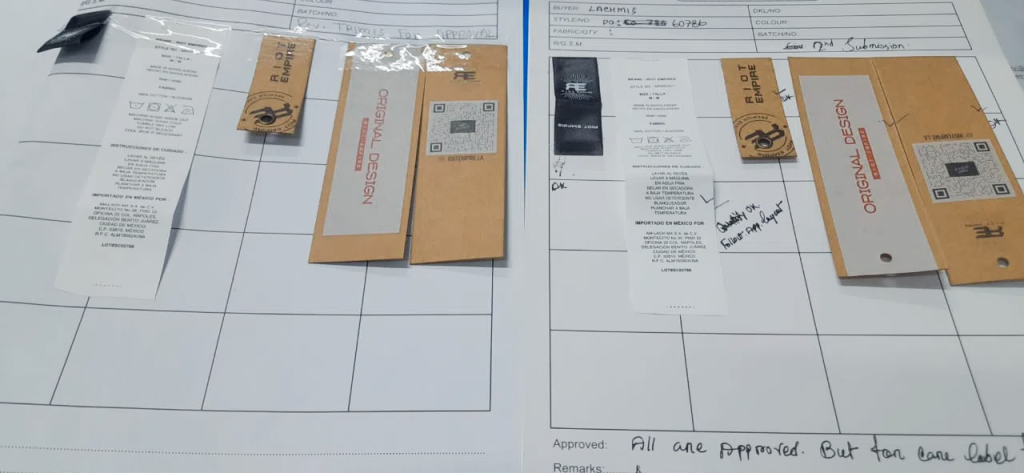
- Labels (brand, size, care)
- Hook & loop (Velcro)
- Interlining
- Shoulder pads, waistbands, linings
Some trims are functional (like zippers and elastic), while some are decorative (like lace, piping, or embroidery patches). But all of them stay with the garment permanently.
What are accessories in apparel industry?
Accessories are additional items that come with the garment for packaging, branding, or presentation. They are not essential for construction but are very important for customer experience and brand value.
👉 Simple definition: Accessories are not part of the garment’s life but support its packaging, protection, and marketing.
Examples of accessories:
- Price tags
- Hangtags
- Hangers
- Polybags
- Cartons
- Tissue paper
- Safety pins
- Neck boards
Accessories usually don’t stay with the customer after purchase. For example, you remove the hanger or throw away the polybag—but they play a key role before the garment reaches the retail shelf.
Trims vs Accessories in apparel industry
Many beginners get confused between trims and accessories. The easiest way to remember the difference is:
| Trims | Accessories |
|---|---|
| Essential for garment construction | Non-essential for garment making |
| Permanently attached to garment | Removed after purchase |
| Functional and decorative | Mostly for packaging & presentation |
| Example: zipper, button, thread | Example: hanger, tag, polybag |
This table clears the basic confusion and helps beginner merchandisers explain things to buyers and factories.
Why are trims and accessories important for merchandisers?
As a merchandiser, you will deal with buyers, suppliers, and factories. Trims and accessories are one of the most discussed subjects in every order. Here’s why:
- Order Confirmation: Buyers often specify trims and accessories in tech packs. Without them, order details are incomplete.
- Costing: Trims like zippers, threads, and labels add cost. Accessories like cartons and polybags also count in commercial invoices.
- Quality & Functionality: A bad zipper or weak thread can damage the entire shipment.
- Branding: Labels, tags, and packaging accessories represent the buyer’s brand.
- Shipment & Delivery: Without accessories like cartons, hangers, or polybags, garments cannot be properly shipped.
Practical example for beginners
Imagine you are sourcing a men’s polo shirt. The buyer sends you a tech pack. Here’s what you need to think about:
- Main Fabric: Cotton pique
- Trims: Buttons, sewing thread, size label, care label
- Accessories: Polybag, carton, hangtag, tissue paper
Now think—if any of these are missing, the garment is incomplete. Without buttons, you can’t close the polo. Without a polybag, you can’t ship it neatly. This is how trims and accessories together complete the garment journey.
Tips for beginner merchandisers
- Know the List by Heart: Always keep a checklist of trims and accessories for each order.
- Understand Buyer Requirements: Some buyers want eco-friendly trims and accessories, like recycled polybags or organic cotton labels.
- Communicate Clearly: Always confirm trims and accessories with suppliers before production starts.
- Focus on Quality: Even a small pin or label mistake can cause shipment rejection.
- Learn Practical Names: Visit factories, touch and feel trims and accessories, and learn their trade names.
Conclusion
Trims and accessories may look like small things, but in the apparel industry, they carry big value.
- Trims are permanent, functional, and decorative parts of a garment.
- Accessories are temporary, supportive items mainly for packaging and branding.
For beginner merchandisers, knowing trims and accessories is like learning the alphabet of apparel merchandising. Without this knowledge, handling buyers and suppliers becomes difficult. But once you master it, you gain confidence in communication, costing, and order execution.
So next time you see a shirt or dress, look closely. Behind every zipper, button, hangtag, or polybag—there is a merchandiser’s effort.
💬 0 Comments
💭 Share your thoughts