
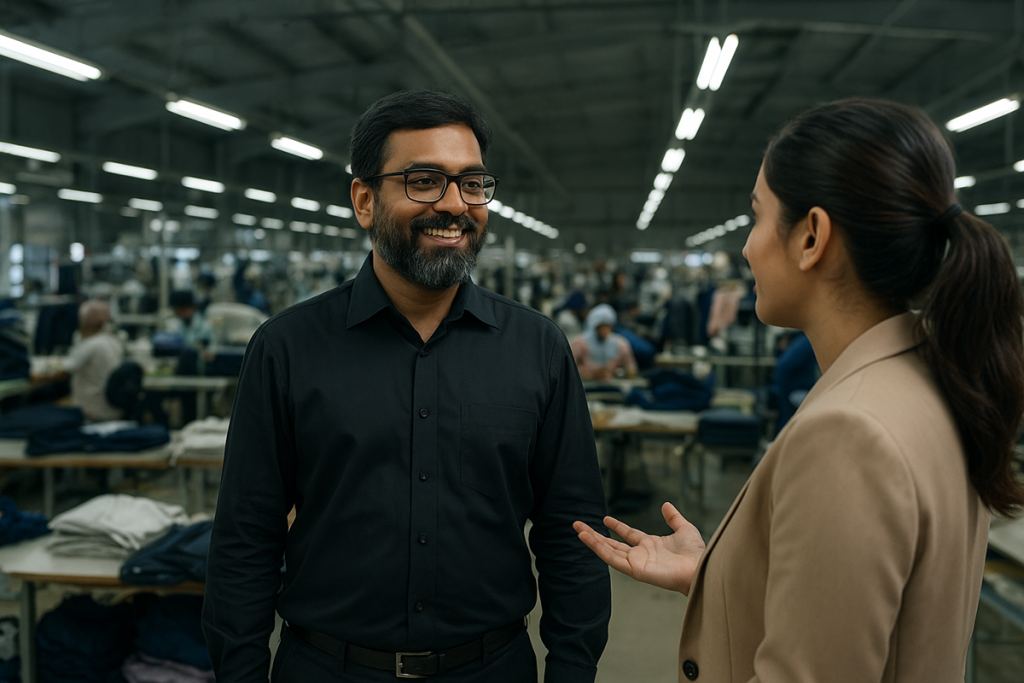
The Real Power of an Apparel Merchandiser: Getting Work Done Through Others — Efficiently and Effectively
When people hear the word merchandiser in the apparel industry, they often think of someone who just handles buyer emails, prepares costing sheets, or follows up with suppliers. But in reality, a successful apparel merchandiser is much more than that.
One key skill separates an average merchandiser from a great one:
👉 The ability to get work done through others — efficiently and effectively.
This might sound simple, but in the fast-paced garment industry, where deadlines are tight and pressure is constant, this skill can decide whether an order ships on time or gets delayed.
Why this skill matters in apparel merchandising
Unlike sewing operators or designers, merchandisers don’t physically produce garments. Instead, they coordinate and control the entire supply chain — from fabric sourcing to buyer shipment.
Think of an apparel merchandiser as the captain of a ship. The captain doesn’t row but ensures the crew rows in sync, in the right direction, and reaches the destination on time.
Without this ability, deadlines are missed, quality is compromised, and buyers lose trust. In an industry where “time is money”, this skill is the foundation of success.
Efficiency vs Effectiveness: the two pillars
To truly understand the role, we must break it into two parts:
- Efficiency = Doing tasks quickly, with minimal waste.
- Effectiveness = Doing the right tasks, to achieve the desired result.
Example:
- A merchandiser can pressure sewing teams to finish 10,000 garments fast (efficient), but if the stitches are poor and the buyer rejects them, it’s not effective.
- A merchandiser may ensure garments meet buyer quality standards (effective), but if production is delayed and shipment misses the deadline, efficiency is lost.
👉 The real power lies in balancing both.
How apparel merchandisers get work done through others
1. Clear communication
Most problems in factories happen because of miscommunication.
- If the buyer wants red, but the dyeing team makes maroon — that’s a problem.
- If the zipper size is not explained properly, sewing will stop.
Good merchandisers always:
- Give clear instructions.
- Double-check details.
- Follow up every day.
2. Building good relationships
A merchandiser cannot force people to work. But if you build good relationships, people will help you when you need it most.
- Be polite with operators and supervisors.
- Respect everyone, from helpers to managers.
- Appreciate good work.
👉 When people like you, they will prioritize your orders, even during busy seasons.
3. Problem-solving attitude
In this industry, problems are normal.
- Fabric may arrive late.
- Printing machines may break down.
- Trims may get stuck at customs.
A weak merchandiser blames others.
A strong merchandiser finds a solution.
For example:
- If fabric is late, check if partial cutting can start.
- If trims are delayed, ask the buyer for a temporary alternative.
👉 The goal is simple: keep production moving.
4. Using time and action (TNA) plans
Merchandising is like a countdown clock. Every order has a shipment date.
Good merchandisers always prepare a TNA calendar. It shows:
- When fabric must be ordered.
- When knitting must finish.
- When sewing must start.
- When shipment must go.
Every day, the merchandiser checks if teams are following the plan. This way, no step is missed.
5. Motivating others
Sometimes factory teams are tired. Sometimes they feel pressure. At that moment, a good merchandiser acts like a leader.
- A small “Thank you” motivates workers.
- A simple “Let’s do this together” makes the team stronger.
- Even standing on the sewing floor during urgent work shows that you care.
👉 People don’t work only for money. They also work harder for respect.
A Real-Life example
Let me share a story.
One merchandiser in Bangladesh was handling a jacket order for a European brand. Suddenly, the shipment of zippers got stuck at the port. Production was about to stop.
What did he do?
- He contacted a local supplier.
- Got approval from the buyer by sending sample photos.
- Convinced the sewing team to continue production with the approved local zipper.
Result?
- The order shipped on time.
- The buyer was happy.
- The factory trusted him more.
👉 This is the real power of a merchandiser — solving problems and keeping production alive.
Skills every merchandiser needs
If you want to grow as a merchandiser, practice these skills:
- Communication: Always be clear and simple.
- Follow-up: Never assume; always check.
- Negotiation: Convince buyers and suppliers smartly.
- Basic technical knowledge: Learn about fabric, trims, and sewing.
- Leadership: Guide people, don’t just order them.
The real power in one line
In the end, a merchandiser’s true value is not in emails, costing sheets, or sample approvals. It is in managing people and making things happen.
So when you say:
“I have the skill to get work done through others — efficiently and effectively.”
You are not only describing yourself. You are describing the true role of an apparel merchandiser.
Final Thoughts
The garment industry is tough. Deadlines are tight. Buyers are demanding. Factories are always under pressure.
But a merchandiser who knows how to manage people, solve problems, and balance speed with quality will always stand out.
That is the real power of merchandising.
💬 0 Comments
💭 Share your thoughts